Class 10 Self Management Skills Notes | CBSE Quick Revision Guide
Class 10 Self Management Skills Notes | CBSE Quick Revision Guide
Want to master and score full marks in CBSE Employability Skills?
This Class 10 Self Management Skills Notes are designed with easy explanations and exam-oriented content to help you score high marks with confidence.
This Self-Management Skills Notes of Class 10 are designed by experts and aligned with the CBSE Employability Skills syllabus. They are a must-practice resource to understand all concepts easily, build confidence, and perform your best in the board exams.
Self-Management
- Self-management (or self-control) is ability to control emotions, thoughts, and behaviour effectively in different situations.
- It Includes maintaining discipline and timeliness, goal-setting, problem solving and motivation etc.
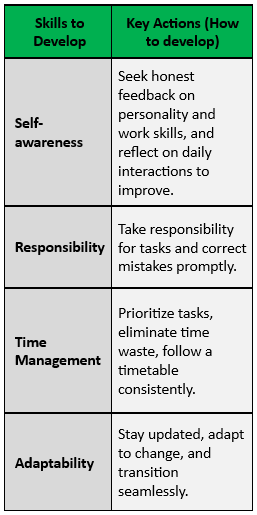
Key Skills for Effective Self-Management:
Class 10 Self Management Skills Notes | CBSE Employability Skills Notes
Session 1: Stress Management
What is Stress?
- Emotional, mental, physical, social reactions to any perceived demands or threats (stressors).
- Examples of stressors (reason for stress): exams, loss in family, peer judgment, lack of sleep.
Stress Management
- Managing stress means making a plan to be able to cope effectively with daily pressures, aiming for balance between life, work, relationships, relaxation, and fun.
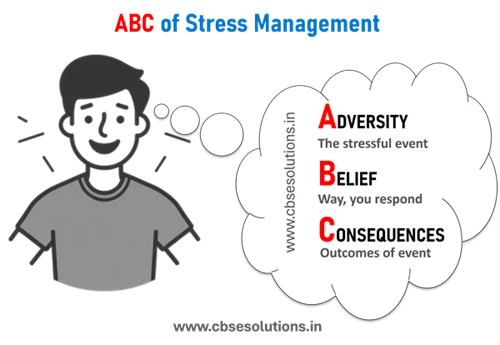
ABC of Stress Management:
Benefits of Effective Stress Management:
- Leads to a joyful, happy life
- Improves focus and timely task completion
- Be a happy person as you are stress free.
- Spend quality time with family and friends
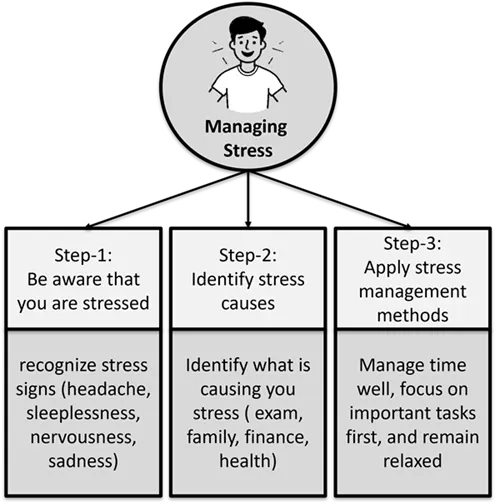
Steps to Manage Stress:
Stress Management Techniques:
- Time management, planning tasks
- Physical exercise, yoga, meditation, deep breathing
- Healthy diet, proper sleep (≥7 hours)
- Positivity, focusing on solutions
- Organizing academic life, completing assignments on time
- Breaks/holidays with family and friends
Emotional Intelligence
- Definition: Ability to recognize and manage your own and others’ emotions.
- Importance: Manage stress, overcome failures, improve relationships, achieve balanced life
Emotional Intelligence Skills:
- Emotional awareness – identify your emotions
- Harnessing emotions – apply emotions to tasks/problem-solving
- Managing emotions – regulate your emotions and help others
Tips to manage Emotional Intelligence:
- Understand your emotions
- Think rationally and avoid abrupt decisions
- Practise yoga and meditations
Self Management Class 10 Notes | Complete CBSE Employability Skills Guide
Session 2: Self-Awareness – Strength & Weakness Analysis
- Self-awareness: Ability to know inner strengths, weaknesses, values, likes/dislikes, beliefs, and skills.
- Why it matters: It helps you identify your strengths and weaknesses, which ultimately helps you improve yourself.
Techniques to Identify Strengths & Weaknesses:
- Finding Strengths:
- Think on tasks you succeed at consistently
- Consider what others appreciate in you
- Take time to think what you do well
- Finding Weaknesses:
- Identify areas where you struggle or face difficulty
- Review feedback from others
- Accept weaknesses as areas for improvement
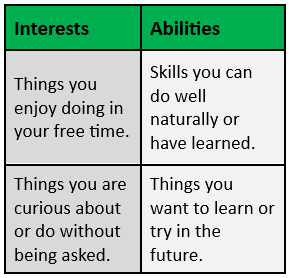
Difference Between Interests & Abilities:
Class 10 Self Management Skills Notes | Quick and Easy Revision
Session 3: Self-Motivation
- Definition: force within you that drives you to achieve goals, feel happy and improve quality of life. Without external influence.
- Examples: Practicing sample papers, complete work on time, preparing for competitive exams.
Types of Motivation
- Internal (Love): Doing things that make you happy, healthy and feel good. Example – dancing, singing etc.
- External (Reward): Doing things that gives recognition, respect, prizes, and appreciation. Example – Participated in high jump and won medal
Qualities of Self-Motivated People:
- Know what they want in life
- Focused, dedicated, and aware of strengths and preferences
- Know what is important
- Dedicated to fulfil their dreams
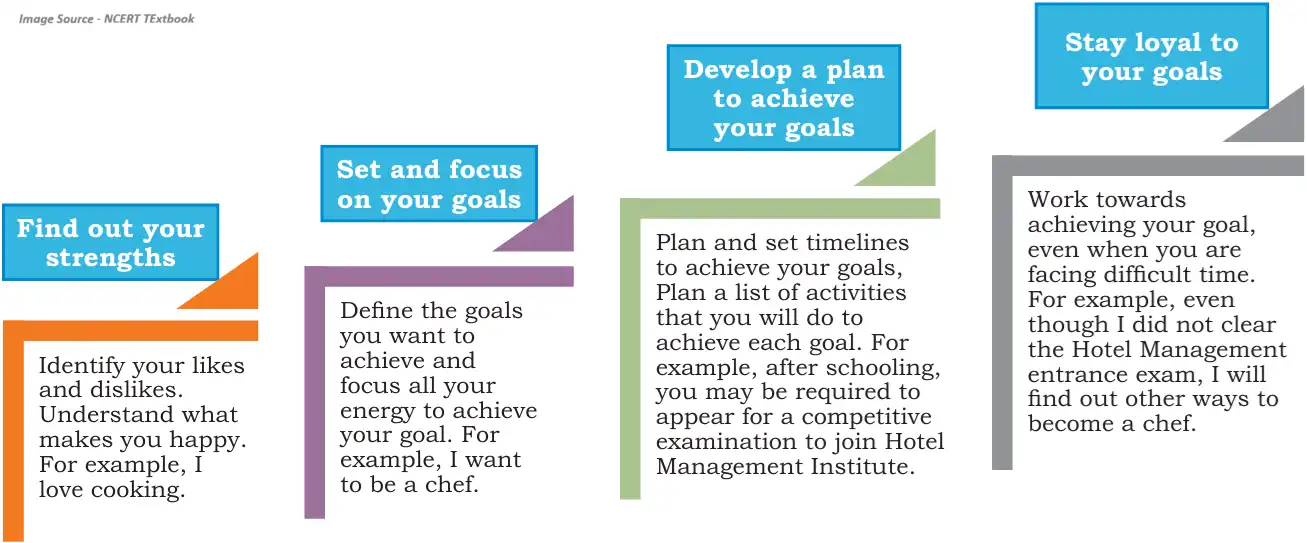
Building Self-Motivation – 4 Steps:
Class 10 Self Management Notes | Quick Revision & Employability Skills Guide
Session 4: Self-Regulation – Goal Setting
- Goals: Set of dreams with a deadline to get them.
- Goal Setting: Finding and listing your goals and then planning on how to achieve them.
How to set Goals:
- Use SMART method to set goals. SMART stands for: Specific – Measurable – Achievable – Realistic – Timely

Session 5: Self-Regulation – Time Management
- Time Management: Planning and controlling how you spend daily hours efficiently.
- Time Management helps you to:
- complete tasks on time.
- make a daily timetable.
- make a good guess at how long it will take you to do something.
- submit homework and assignments on time.
- not waste time during the day.
Steps for Effective Time Management:
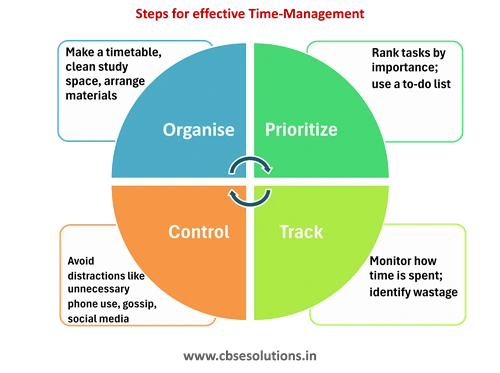
Tips for Practicing the Four Steps for Effective Time Management
- Avoid postponing tasks
- Maintain organized workspace
- develop no disturbance zone where you can complete tasks
- Use waiting time productively
- Prepare ‘to-do’ list
- Replace unproductive activities with meaningful ones
Key Takeaways