Self Management Important Questions Class 12 – CBSE Exam Guide
Latest and comprehensive Self Management Important Questions Class 12 and answers for CBSE exams. Strengthen your understanding and score high.
Your Class 12 CBSE exam preparation becomes easier with the right study material. This guide provides the latest and comprehensive collection of Self-Management important questions and answers, designed especially for Class 12 students. It covers all key concepts, topic-wise, from the CBSE Employability Skills curriculum. These Class 12 Self-Management questions will help you revise effectively, strengthen your concepts, and score high marks in exams with confidence.
Self Management Important Questions Class 12
Q1. What is self-management?
Ans.
Self-management, also called self-control, is the ability to control one’s emotions, thoughts and behaviour effectively.
Q2. How self-management skills are important for students?
Ans:
Self-management skills help students:
- To be punctual
- Pay attention in class
- Obey elders
- Work with discipline, and
- Perform better in studies and life.
Q3. List any three qualities of a person with good self-management skills.
Ans.
A person with good self-management skills shows:
- Timeliness in work and studies
- Discipline in behaviour and habits
- Problem-solving ability and good work habits
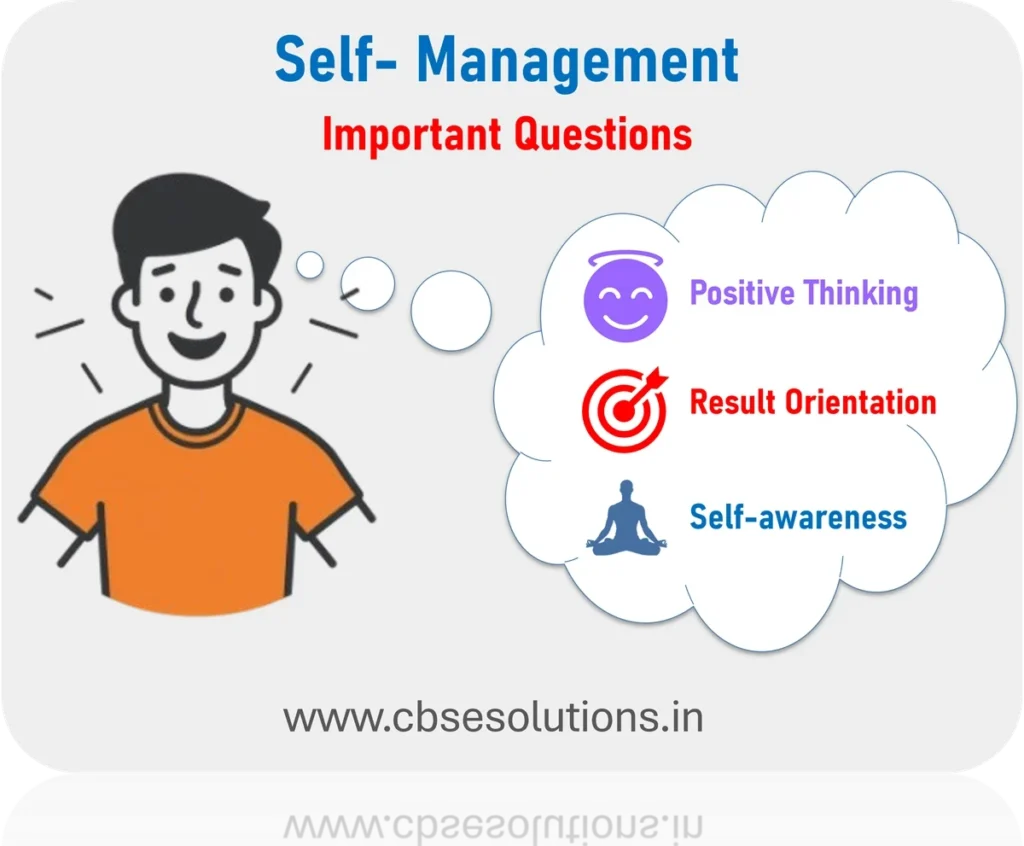
Q4. Bajrang wants to improve his self-management skills. Suggest any three key aspects he should develop.
Ans: Bajrang should manage following key aspects:
- Positive Thinking → Believing in ability to achieve tasks.
- Result Orientation → Focusing on goals and desired outcomes.
- Self-awareness → Knowing strengths/weaknesses and using them wisely.
Q5. Differentiate between intrinsic and extrinsic motivation with examples.
Ans.
- Intrinsic Motivation: When motivation comes from within to do something without expecting any reward is called Intrinsic motivation. (e.g., studying a subject out of interest).
- Extrinsic Motivation: When motivation comes from external rewards such as money, recognition, incentives is called extrinsic motivation. (e.g., working hard to get promotion).
Q6. How can motivation help in achieving academic and personal goals?
Ans.
Motivation directs behaviour towards goals. It gives energy to overcome fear, take up challenges, and continue working hard. With motivation, one can achieve success and move closer to their personal dreams.
Q7. Explain any three benefits of having a positive attitude.
Ans.
A positive attitude:
- Makes a person happier and healthier.
- Helps in building and maintaining relationships.
- Increases chances of success by improving decisions.
Self Management Important Questions Class 12
Q8. Suggest three ways to maintain a positive attitude in daily life.
Ans.
- Start the day with a morning routine and positive affirmations.
- Feed the mind with positivity by reading books or listening to inspiring music.
- Focus on solutions instead of problems.
Q9. How does a positive attitude help students during exam results or failures?
Ans.
A positive attitude helps students accept results gracefully, not lose hope, and continue working hard for the next exam. It keeps them motivated and reduces stress even in failures.
Q10. What is stress? Mention any three techniques to manage it.
Ans.
Stress is a state of feeling upset, annoyed, or hopeless when things don’t go right.
Ways to manage stress:
- Stay positive and analyse the situation.
- Talk to friends and family for comfort.
- Practise meditation and yoga.
- Keep your thoughts present
Q11. How can yoga and meditation help in stress management?
Ans. Yoga and meditation help in stress management by:
- Relaxing the mind
- Improve focus
- Reduce negative thoughts and emotions
Q12. What is result orientation? Why is it important?
Ans.
Result Orientation is the ability to recognise important results and focus on the steps required to achieve them. It Focuses on outcomes of task rather than the process. It is important as it keeps you determined and motivates consistent effort to achieve the goal.
Q13. State any three steps to set result-oriented goals.
Ans.
- Set clear and accurate goals
- Prepare appropriate action plan
- Use right resources and tools to achieve goals
- Make a calendar to monitor progress
Q14. Expand SMART in goal setting and explain any two of them.
Ans.
SMART stands for: Specific, Measurable, Achievable, Relevant, Time-bound.
- Specific: The goal must be clear.
- Time-bound: It should be completed within a set time.
Q15. What is self-awareness? How does it help in personal growth?
Ans.
Self-awareness is about understanding one’s own needs, desires, habits, traits, behaviours and feelings. It helps in personal growth by making aware of everything and looks at things or situations objectively.
Self Management Important Questions Class 12
Q16. Mention any three factors of the Five Factor Model of personality.
Ans.
The Five Factor Model includes:
- Openness
- Conscientiousness
- Extraversion
(Other two are Agreeableness and Neuroticism)
Q17. Define personality disorder with one example.
Ans.
A personality disorder is a pattern of thinking, feeling, and behaving that deviates from societal expectations and causes long-term distress. Example: Antisocial Personality Disorder, where a person disregards social rules and obligations.
Q18. Write any three ways to overcome personality disorders.
Ans.
- Improve positive thinking
- Practice yoga and meditation
- Talk to family and friends
- Communicate with mentors and teachers
- Follow a healthy diet
Q19. List the three clusters of personality disorders with one disorder each.
Ans.
- Cluster A: Suspicious – Example: Paranoid Personality Disorder
- Cluster B: Emotional and Impulsive – Example: Antisocial Personality Disorder
- Cluster C: Anxiousl – Example: Avoidant Personality Disorder
Q20. Expand the acronym SMART in goal setting.
Ans.
Specific, Measurable, Action-oriented, Realistic, Timely.