Class 12 Entrepreneurial Skills Notes | Quick Revision for Board Exams
🏆 Dreaming to score full marks in Entrepreneurship skills?
These Class 12 Entrepreneurial Skills Notes will strenghten your preparation and sure to help you to score high marks. These Entrepreneurial Skills Notes of Class 12 is specially designed by CBSE experts and based on the latest syllabus and aligned with CBSE Employability Skills syllabus.
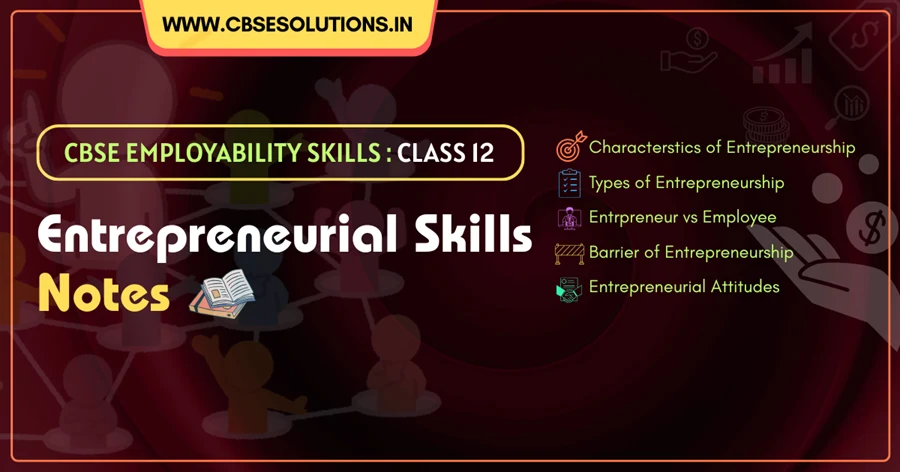
These Entrepreneurial skills short notes class 12 cover all essential topics like Characterstics of Entrepreneuship, Qualities of entrepreneurship, Entrepreneur vs Employee, Barriers to Entrepreneurship, Attitudes & Competencies etc. (Check Table of Content), explained in short, clear pointers.
So why to wait — Boost Employability Skills with latest & comprehensive Entrepreneurial Skills Notes Class 12. Revise all key concepts easily to ace your CBSE board. Beacuase These Entrepreneurial Class 12 Notes make complex topics simple and easy to remember.
Session1: Entrepreneur & Entrepreneurship
- Word entrepreneur derived from French word entreprendre (“to undertake”).
- Entrepreneurship is economic process of generating, developing & implementing an idea under uncertainty to realise profit.
- Entrepreneur = person who identifies opportunity, organises resources and labours, takes risk and make decisions, and build profit.
Characteristics of Entrepreneurship
- Activity done to create and maintain a profit-oriented organisation.
- Identifying an opportunity to sell and make profit in the market.
- Optimisation in utilisation of resources.
- Ability to take risks
Class 12 Entrepreneurial Skills Notes
Qualities of a Successful Entrepreneur
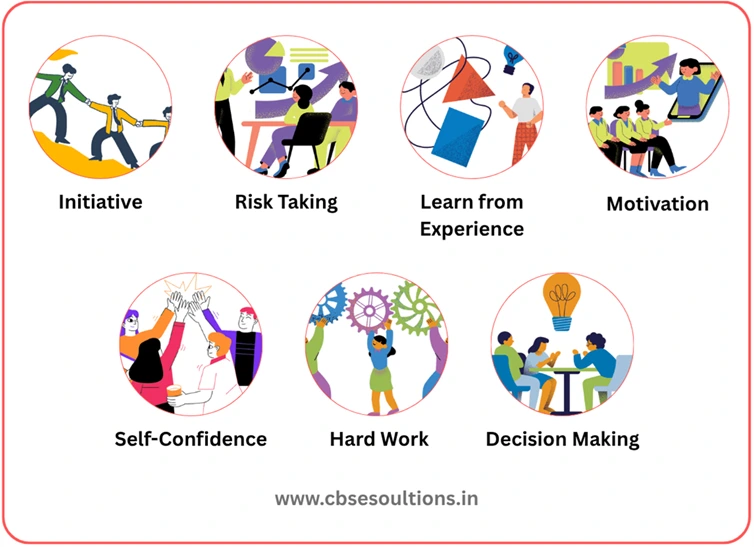
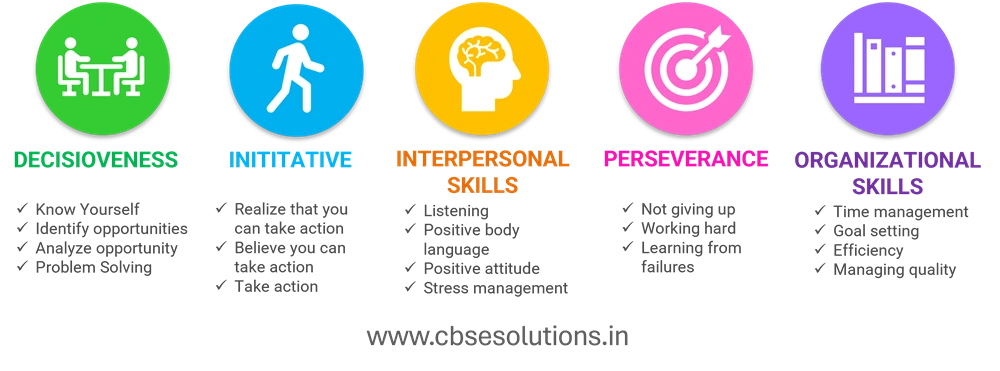
- Initiative – ability to act quickly on opportunities and take advantages.
- Risk-taking – Willingness to take risks to run a business despite uncertainty.
- Learn from experience – Learn from mistakes and avoid repeating them in the future.
- Motivation – passion to complete goals.
- Self-confidence – Belief in one’s abilities, with courage and enthusiasm to take lead.
- Hard work – Consistently putting effort to identify and solve problems promptly.
- Decision-making ability – Capable of making suitable and timely decisions.
Types of Entrepreneurs
- Service entrepreneurs – Create new services to market or new market for service
- Business entrepreneurs – Undertaking business and trading activities (not manufacturing).
- Industrial entrepreneurs – Manufacturing & production.
- Agricultural entrepreneurs – Practicing agriculture with modern and innovative techniques.
- Technical entrepreneurs – Use technical expertise for innovating new machines.
- Non-technical entrepreneurs – Expertise in providing services to create a market for technical entrepreneurs.
- Professional entrepreneurs – Builds a self-sustaining business, sells it, and repeats same with a new venture.
- IT entrepreneurs –Work in Information Technology field.
- Women entrepreneurs – Entrepreneurial activities lead by women.
- Social entrepreneurs – Focus on developing solutions that benefit the society, culture, and environment.
- Family business entrepreneurs – inherit & run family businesses.
- First-generation entrepreneurs – no prior entrepreneurship background.
Roles & Functions of an Entrepreneur
(a) Identifying opportunities.
(b) Turning ideas into action.
(c) Conducting feasibility study (business plan).
(d) Arranging resources – finance, raw materials, workforce.
(e) Setting up enterprise – legal & infrastructural requirements.
(f) Managing enterprise – production, marketing, finance, workforce.
(g) Growth & development – striving for higher goals & excellence.
Class 12 Entrepreneurial Skills Notes
Motivation of Entrepreneurs
- Standard of excellence – Setting and Striving high benchmark & innovation.
- Uniqueness – Standing unique in approach & results.
- Long-term goals – Focusing more on what is to be achieved in distant future.
- Need to influence – Making impact on society/world.
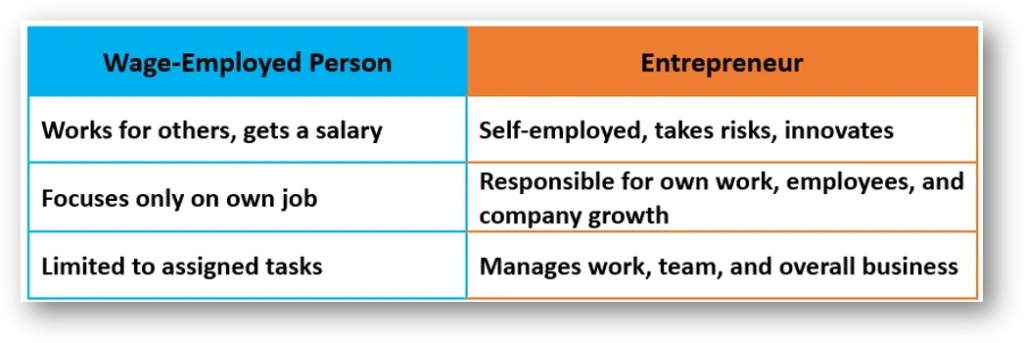
Difference: Entrepreneur vs Wage Employed Person
Startups
- When company in its early stage of operations is called startups.
- Different from traditional business and focus on innovation & growth.
- Usually financed by founders, later by angel investors/venture capitalists.
- Startup India Initiative – provides tax benefits, govt. funding, exemptions, ecosystem for growth.
⚡ Important Note: Startup India is a flagship initiative of government of India to build a strong startup ecosystem. It offers funding, tax benefits, and exemptions to eligible startups. (Website: http://startupindia.in)
Session 2: Barriers to Entrepreneurship
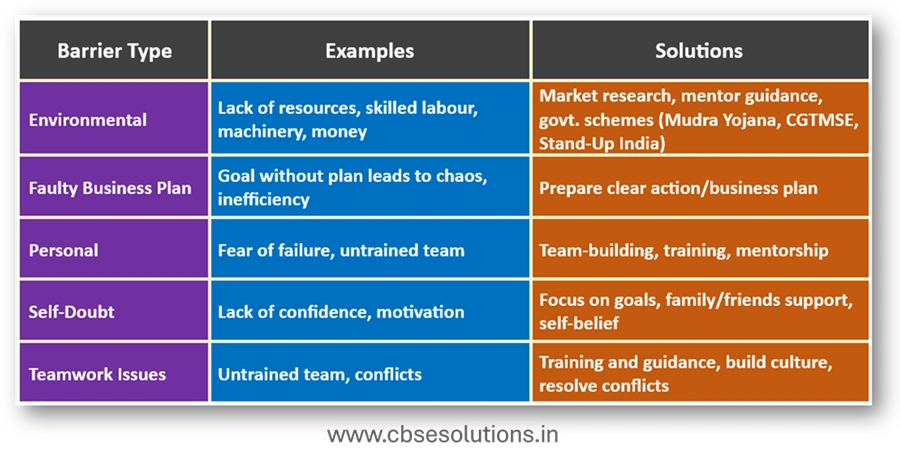
Meaning of Barriers
- Barriers refers to hurdles that slow or stop entrepreneurial growth and success. Examples:
- Financial constraints.
- Lack of resources.
- Self-doubt or fear of failure.
Class 12 Entrepreneurial Skills Notes
Types of Barriers
Session 3: Entrepreneurial Attitudes
- Attitude is way of thinking/feeling (positive or negative) that help entrepreneurs succeed.
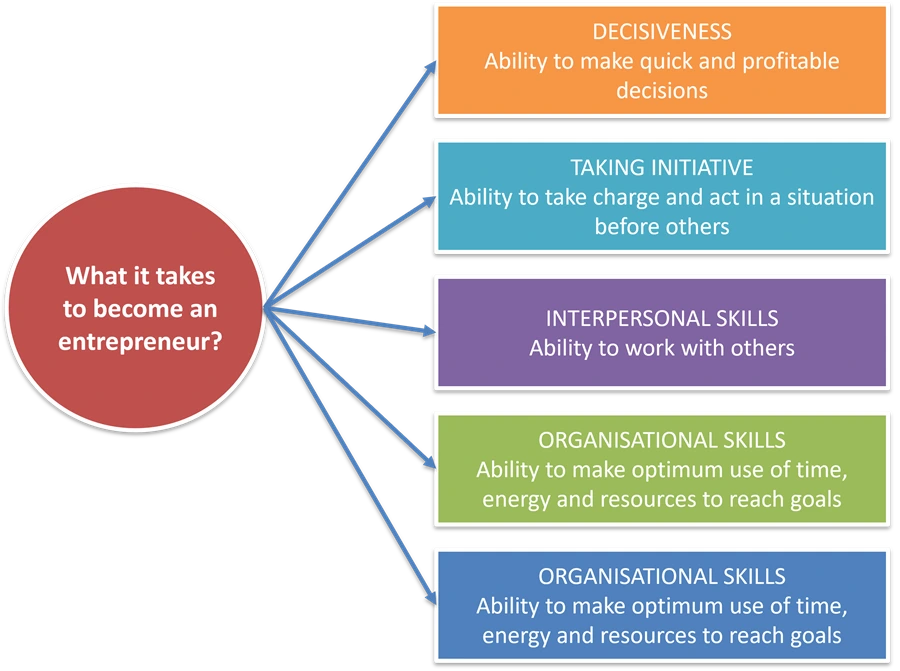
Session-4: Entrepreneurial Competencies
Attitudes & Competencies
- Competency is the ability to do something well.it helps to build entrepreneurial attitude.
Key Entrepreneurial Attitudes & Competencies